Why Ranking #1 on Google Isn’t Everything in the Age of AI Search

Why Ranking #1 on Google Isn’t Everything in the Age of AI Search

SEO, WordPress

For years, businesses have chased one goal: ranking #1 on Google. It was the ultimate measure of online success.

But things have changed—fast.

With the rise of AI-powered search engines like ChatGPT, Google SGE, and others, users are no longer just clicking links. They’re getting direct answers. And often, those answers don’t come from the #1 ranked page.

So the real question is:
If users aren’t clicking, does ranking still matter?

Let’s break it down.

 The Shift from Search Engine to Answer Engine

Traditional search works like this:

  • User searches a keyword
  • Google shows 10 blue links
  • User clicks the top result

But AI search works differently:

  • User asks a question
  • AI generates a direct answer
  • Sources are summarized, not clicked

This means:
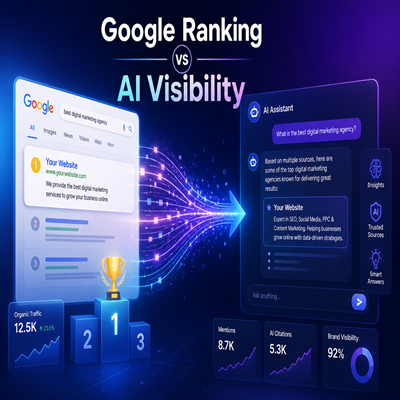
Visibility is shifting from rankings to mentions.

 Why #1 Ranking Alone Is Losing Power

Even if your website ranks #1, you might still lose traffic because:

  • AI tools summarize multiple sources (not just yours)
  • Users don’t always click links anymore
  • Featured snippets and AI overviews reduce CTR
  • Voice and conversational queries dominate

So yes, ranking still matters—but it’s no longer enough.

 What Actually Matters Now: AI Visibility

Instead of only focusing on SEO rankings, you need to focus on:

1. AI Citations

Your content should be structured so AI tools can easily reference it.

2. Brand Mentions

Even if users don’t click, your brand should appear in AI-generated answers.

3. Topical Authority

AI prefers websites that consistently cover a topic in depth.

4. Structured & Clear Content

AI loves:

  • FAQs
  • Lists
  • Clear headings
  • Direct answers

 How AI Tools Choose Content

AI platforms like ChatGPT, Gemini, and Perplexity typically prioritize:

  • High-quality, well-structured content
  • Pages with strong authority signals
  • Frequently cited sources
  • Content that answers questions clearly

 They don’t just pick the #1 Google result—they pick the best answer.

 How to Optimize for AI Search (Not Just Google)

Here’s what you should start doing right now:

✅ Create Answer-Focused Content

Write like you’re directly answering a user question.

✅ Add FAQ Sections

This increases chances of being picked by AI.

✅ Use Natural Language

Think conversational, not keyword-stuffed.

✅ Build Topical Clusters

Instead of one page, create multiple related articles.

✅ Improve Entity & Brand Signals

Mention your brand consistently across platforms.

✅ Get Cited on Other Websites

AI trusts content that is referenced elsewhere.

 Traditional SEO vs AI SEO

FactorTraditional SEOAI Search Optimization
GoalRank #1Get cited in AI answers
FocusKeywordsContext & intent
CTRHigh importanceLower importance
ContentKeyword optimizedAnswer optimized
AuthorityBacklinksMentions + trust

 The Future: Search Without Clicking

We are entering a “zero-click” world where:

  • Users trust AI summaries
  • Traffic decreases but visibility increases
  • Branding becomes more important than ranking

 Winning in this era means being present in answers, not just search results.

 FAQ Section (For AI & SEO Boost)

Q1: Is ranking #1 on Google still important?

Yes, but it’s no longer the only goal. AI search often bypasses traditional rankings.

Q2: What is AI visibility?

AI visibility means your content is cited, referenced, or used in AI-generated answers.

Q3: How can I appear in ChatGPT or AI answers?

Create structured, high-quality content with clear answers, FAQs, and authority signals.

Q4: Does SEO still matter in 2026?

Yes, but it has evolved. SEO now includes AI optimization, not just rankings.

Q5: What type of content works best for AI search?

  • Informational blogs
  • How-to guides
  • FAQs
  • Comparison articles

    Conclusion

    Ranking #1 on Google is no longer the finish line—it’s just one part of the race.

    In the age of AI search, success means:
    ✔ Being cited
    ✔ Being mentioned
    ✔ Being trusted

     The brands that adapt early will dominate the next generation of search.

    If you’re looking to improve your online presence, check our SEO services page / Hire Our Developer / Contact Us

Content vs Backlinks: What Really Matters in 2025 SEO

Content vs Backlinks: What Really Matters in 2025 SEO

SEO

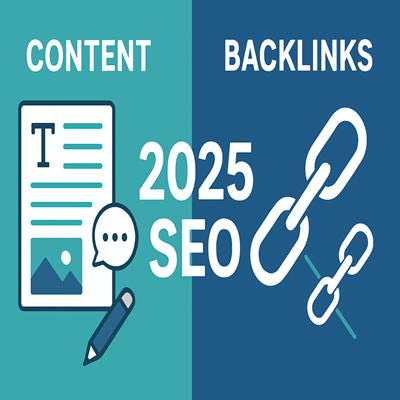
The debate around content vs backlinks has been going on for years in the SEO world. As we step into 2025, the rules of Google ranking continue to evolve, but one question remains: what really matters more — content or backlinks? Let’s break it down.


The Role of Content in 2025

Content has always been the backbone of SEO. In 2025, Google’s algorithms have become smarter than ever, focusing heavily on:

  • Relevance & Depth: Shallow content is quickly ignored. In-depth, niche-specific content ranks higher.

  • User Experience: Content that satisfies intent — whether informational, transactional, or navigational — performs better.

  • E-E-A-T Factors: Experience, Expertise, Authoritativeness, and Trustworthiness are now non-negotiable.

High-quality content also naturally attracts backlinks, making it a double win.


The Power of Backlinks in 2025

Backlinks are still a major ranking factor, but their quality outweighs quantity more than ever before. Google now focuses on:

  • Relevance of Links – Links from niche-related sites have more impact.

  • Authority of Domains – Backlinks from trusted, established websites remain powerful.

  • Natural Link Building – Paid or manipulative link schemes are riskier than ever.

Backlinks act as endorsements, proving your site deserves attention.


Content vs Backlinks: The Real Answer

The truth is — you can’t ignore either. In 2025, SEO success comes from balancing both:

  • Without great content, backlinks won’t stick.

  • Without quality backlinks, even the best content may struggle to rank.

Think of content as the foundation and backlinks as the fuel. Together, they drive visibility and authority.


Final Thoughts

In 2025, the SEO game isn’t about choosing between content vs backlinks — it’s about leveraging both strategically. Create valuable, audience-focused content and amplify it through authentic backlink building. That’s the formula for long-term rankings and online growth.

Affordable SEO India

How to Rank a New Website on Google in Just 90 Days

How to Rank a New Website on Google in Just 90 Days

SEO

Launching a new website is exciting, but the real challenge begins when you want it to rank on Google. The truth is, search engine optimization (SEO) is a marathon, not a sprint. However, with the right strategy and consistent efforts, you can start seeing significant results in as little as 90 days.

Here’s a step-by-step guide to help your new website climb Google’s search rankings:


1. Build a Strong Foundation (Week 1–2)

  • Keyword Research: Use tools like Google Keyword Planner, Ahrefs, or SEMrush to find low-competition, high-intent keywords.

  • On-Page SEO: Optimize titles, meta descriptions, headers, and URLs.

  • Mobile-Friendly & Fast Loading: Google prioritizes websites with good user experience, so make sure your site is responsive and optimized for speed.


2. Publish High-Quality Content (Week 2–6)

  • Create pillar content around your main topics and support them with blog posts.

  • Focus on user intent—write content that solves real problems for your target audience.

  • Publish consistently—Google loves fresh content.


3. Build Authority with Backlinks (Week 4–10)

  • Guest post on relevant blogs in your niche.

  • Submit your website to directories and forums.

  • Collaborate with influencers or industry experts for mentions and backlinks.

  • Use social sharing platforms like LinkedIn, Reddit, and Quora to promote your content organically.


4. Optimize for Technical SEO (Ongoing)

  • Submit your sitemap to Google Search Console.

  • Fix broken links, improve internal linking, and set up proper redirects.

  • Optimize images with alt tags and compression.

  • Ensure HTTPS security for trustworthiness.


5. Track, Analyze & Adjust (Week 8–12)

  • Use Google Analytics and Search Console to track keyword rankings, impressions, and clicks.

  • Double down on content that performs well.

  • Update and repurpose old blogs to keep them relevant.


6. Leverage Local SEO (If Applicable)

  • Register your business on Google Business Profile.

  • Collect reviews from happy customers.

  • Target location-based keywords.


Final Thoughts

Ranking a new website on Google in just 90 days requires focus, effort, and patience. By combining quality content, backlinks, technical optimization, and consistent analysis, you can dramatically improve your visibility in search results.

Remember—SEO is an ongoing process. The key is consistency and adaptability.

Affordable SEO India