

Why React Is Still the King of Frontend Development in 2025

Why React Is Still the King of Frontend Development in 2025

React

In the ever-evolving world of frontend development, technologies rise and fall at lightning speed. Yet, even in 2025, React remains the undisputed leader. Despite the emergence of frameworks like Vue, Angular, and Svelte, React has managed not only to stay relevant but also to grow stronger with time.

So, what makes React so enduring, and why do businesses and developers still swear by it? Let’s explore.


1. Huge Ecosystem and Community Support

One of React’s greatest strengths is its massive ecosystem. With thousands of libraries, plugins, and community-driven tools, developers rarely have to reinvent the wheel. Whether you’re building a simple landing page or a complex enterprise app, React has you covered.

Additionally, React boasts one of the largest developer communities worldwide. This means faster bug fixes, extensive documentation, and a constant flow of tutorials and resources.


2. Backed by Meta (Facebook)

React’s backing by Meta (formerly Facebook) gives it long-term credibility and trust. While many frameworks fade away due to lack of support, React continues to evolve thanks to dedicated engineering teams at Meta and contributions from the open-source community.


3. Performance and Scalability

React’s virtual DOM and component-driven architecture make applications fast and scalable. Developers can build interactive, high-performance UIs without sacrificing flexibility. This is why leading platforms like Netflix, Airbnb, and Instagram still rely on React in 2025.


4. Cross-Platform Capabilities with React Native

React isn’t just for web. With React Native, developers can create mobile apps for iOS and Android using the same knowledge base. This code reusability saves time, reduces costs, and keeps React at the top of the stack for startups and enterprises alike.


5. Continuous Innovation

React hasn’t stood still. In recent years, features like Concurrent Mode, Server Components, and better SSR (Server-Side Rendering) support have kept it modern and efficient. These innovations ensure that React stays competitive with newer frameworks.


6. Wide Industry Adoption

From startups to Fortune 500 companies, React continues to be the default choice for front-end development. Its popularity ensures abundant job opportunities, making it attractive for developers and businesses alike.


Conclusion

React’s dominance in 2025 is no accident—it’s the result of community support, innovation, performance, and cross-platform flexibility. While other frameworks have their strengths, React continues to hold the crown as the king of front-end development.

If you’re a developer looking to future-proof your career or a business seeking reliable technology for your product, React is still your best bet in 2025.
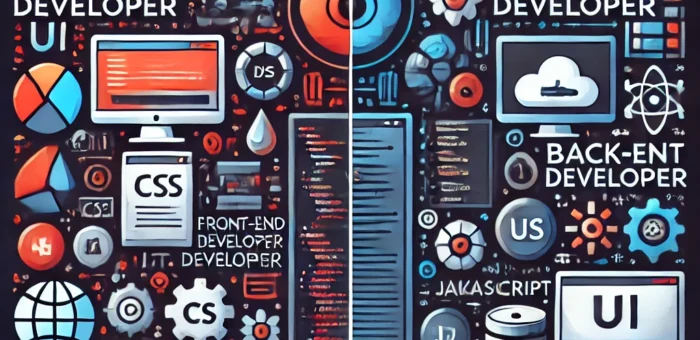
Front-End Developer vs Back-End Developer: Understanding the Differences

Front-End Developer vs Back-End Developer: Understanding the Differences

WordPress

In the world of web development, two key roles stand at the forefront of creating the digital experiences we use every day: front-end developers and back-end developers. While they work together to build cohesive web applications, their focuses, skill sets, and daily responsibilities differ significantly.

This article explores the fundamental differences between these two critical roles, helping aspiring developers, hiring managers, and curious minds understand what makes each position unique.

What is a Front-End Developer?

Front-end developers are the architects of everything users see and interact with on a website or application. They transform designs into functional user interfaces and ensure that the visual elements work flawlessly across all devices and browsers.

Responsibilities of Front-End Developers

  • Creating responsive layouts that work on all screen sizes
  • Implementing user interface designs with HTML, CSS, and JavaScript
  • Ensuring website accessibility for all users
  • Optimizing page loading speeds and performance
  • Creating animations and interactive elements
  • Maintaining visual consistency across the entire platform
  • Testing and debugging user interface issues

Key Skills and Technologies

Core Technologies

  • HTML5
  • CSS3
  • JavaScript

Frameworks and Libraries

  • React.js
  • Angular
  • Vue.js
  • jQuery
  • Bootstrap
  • Tailwind CSS

Additional Skills

  • Responsive design principles
  • Cross-browser compatibility
  • Version control (Git)
  • Performance optimization
  • Basic understanding of UI/UX design principles
  • Accessibility standards (WCAG)

What is a Back-End Developer?

Back-end developers build and maintain the behind-the-scenes technology that powers websites and applications. They create the server-side logic that makes front-end functionality possible, working with databases, server configuration, and application architecture.

Responsibilities of Back-End Developers

  • Developing server-side logic for web applications
  • Creating and maintaining databases and data storage solutions
  • Building APIs for front-end interfaces to consume
  • Implementing security and data protection measures
  • Optimizing applications for speed and scalability
  • Integrating external services and systems
  • Troubleshooting and debugging server-side issues

Key Skills and Technologies

Programming Languages

  • Python
  • PHP
  • Ruby
  • Java
  • C#
  • Node.js

Database Technologies

  • MySQL
  • PostgreSQL
  • MongoDB
  • Redis
  • SQL Server
  • Oracle

Additional Skills

  • RESTful API design
  • Authentication and authorization
  • Server management and deployment
  • Performance optimization
  • Security best practices
  • Caching strategies

Key Differences Between Front-End and Back-End Development

Focus and Visibility

  • Front-End: User-facing, visible components of the application
  • Back-End: Behind-the-scenes functionality, invisible to users

Mindset and Priorities

  • Front-End: Emphasis on user experience, design implementation, and accessibility
  • Back-End: Focus on functionality, security, and system architecture

Problem-Solving Approach

  • Front-End: Solving visual and interaction challenges
  • Back-End: Addressing data processing, business logic, and system performance

Tools and Environment

  • Front-End: Browser developer tools, design software integration
  • Back-End: Server environments, database management systems, API testing tools

Which Path is Right for You?

Consider Front-End Development If You:

  • Have an eye for design and enjoy creating visually appealing interfaces
  • Like immediate, visual feedback on your work
  • Enjoy problem-solving related to user experience
  • Are detail-oriented and patient with cross-browser testing
  • Want to work at the intersection of design and programming

Consider Back-End Development If You:

  • Enjoy working with data and building complex systems
  • Prefer logic-based problem-solving
  • Are interested in system architecture and performance optimization
  • Like building the “engines” that power applications
  • Have a strong interest in security and data management

Full-Stack Development: The Best of Both Worlds?

Full-stack developers combine front-end and back-end skills, working across the entire application stack. While this path requires learning more technologies, it offers versatility and a comprehensive understanding of web development processes.

Benefits of Full-Stack Development

  • Broader career opportunities
  • Ability to build complete applications independently
  • Better communication between specialized teams
  • Deeper understanding of how all components work together

Challenges of Full-Stack Development

  • More technologies to learn and keep current
  • Potential for being a “jack of all trades, master of none”
  • Need to balance different mindsets and approaches

Conclusion

Both front-end and back-end development offer rewarding career paths with plenty of opportunities for growth and specialization. The choice between them should be guided by your personal interests, strengths, and career goals.

Many developers start in one area and gradually expand their skills into the other, eventually becoming full-stack developers with a primary specialty. Regardless of which path you choose, continuous learning and adaptation will be key to long-term success in the ever-evolving field of web development.