
Top React Libraries You Should Be Using in 2025

Top React Libraries You Should Be Using in 2025

React

React has been dominating the front-end ecosystem for years, and as we move into 2025, the ecosystem continues to evolve with faster, more powerful, and developer-friendly libraries. Whether you’re building dashboards, e-commerce platforms, or AI-driven apps, the right React libraries can save you time and drastically improve your project quality.

Here are the top React libraries you should be using in 2025:


1. React Query (TanStack Query)

Managing server state is one of the trickiest parts of frontend development. React Query simplifies data fetching, caching, synchronization, and updating. It’s a must-have for apps dealing with real-time data.

✅ Best for: API integration, dashboards, SaaS apps


2. Recoil

State management has always been a hot topic in React. While Redux is still popular, Recoil has gained massive adoption due to its simplicity and performance. In 2025, it’s one of the go-to state management libraries for scalable applications.

✅ Best for: Large apps, scalable state management


3. Framer Motion

Animation is essential for modern UI/UX. Framer Motion provides an easy-to-use API to create smooth, powerful animations and transitions. It integrates seamlessly with React and is highly popular among developers in 2025.

✅ Best for: Interactive apps, landing pages, and modern UI effects


4. NextUI

NextUI is one of the rising stars in React component libraries. With a futuristic design system, dark mode support, and developer-friendly API, it’s a serious competitor to Material UI and Chakra UI in 2025.

✅ Best for: Quick UI development, design-focused apps


5. Zustand

For developers who want a lightweight state management solution, Zustand offers a minimalistic yet powerful store. It’s simpler than Redux and much more flexible, making it a top choice for startups in 2025.

✅ Best for: Lightweight apps, small to medium projects


6. React Hook Form

Forms are still a pain point for many developers, but React Hook Form makes them easier, faster, and more scalable. Its performance and flexibility make it the most recommended form library for 2025.

✅ Best for: Complex forms, enterprise apps, e-commerce


7. Radix UI

For developers who love full customization without being locked into a design system, Radix UI provides accessible, unstyled primitives. You get maximum control with built-in accessibility support.

✅ Best for: Custom UI design, accessibility-first projects


Final Thoughts

The React ecosystem is stronger than ever in 2025, with libraries focusing on performance, developer experience, and design flexibility. Whether you’re building small apps or large-scale platforms, these libraries can give you a competitive edge.

👉 If you’re a React developer, make sure to add these libraries to your toolkit this year!
Hire React Developer India

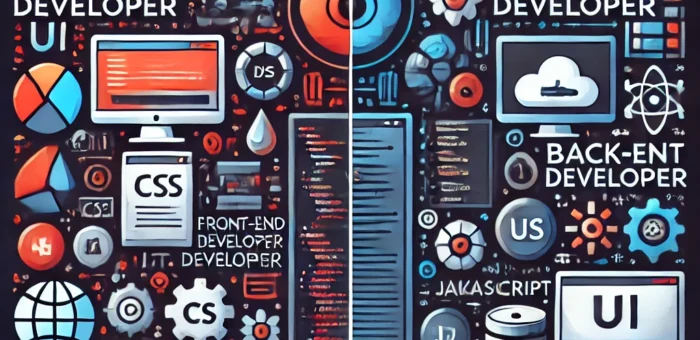
Front-End Developer vs Back-End Developer: Understanding the Differences

Front-End Developer vs Back-End Developer: Understanding the Differences

WordPress

In the world of web development, two key roles stand at the forefront of creating the digital experiences we use every day: front-end developers and back-end developers. While they work together to build cohesive web applications, their focuses, skill sets, and daily responsibilities differ significantly.

This article explores the fundamental differences between these two critical roles, helping aspiring developers, hiring managers, and curious minds understand what makes each position unique.

What is a Front-End Developer?

Front-end developers are the architects of everything users see and interact with on a website or application. They transform designs into functional user interfaces and ensure that the visual elements work flawlessly across all devices and browsers.

Responsibilities of Front-End Developers

  • Creating responsive layouts that work on all screen sizes
  • Implementing user interface designs with HTML, CSS, and JavaScript
  • Ensuring website accessibility for all users
  • Optimizing page loading speeds and performance
  • Creating animations and interactive elements
  • Maintaining visual consistency across the entire platform
  • Testing and debugging user interface issues

Key Skills and Technologies

Core Technologies

  • HTML5
  • CSS3
  • JavaScript

Frameworks and Libraries

  • React.js
  • Angular
  • Vue.js
  • jQuery
  • Bootstrap
  • Tailwind CSS

Additional Skills

  • Responsive design principles
  • Cross-browser compatibility
  • Version control (Git)
  • Performance optimization
  • Basic understanding of UI/UX design principles
  • Accessibility standards (WCAG)

What is a Back-End Developer?

Back-end developers build and maintain the behind-the-scenes technology that powers websites and applications. They create the server-side logic that makes front-end functionality possible, working with databases, server configuration, and application architecture.

Responsibilities of Back-End Developers

  • Developing server-side logic for web applications
  • Creating and maintaining databases and data storage solutions
  • Building APIs for front-end interfaces to consume
  • Implementing security and data protection measures
  • Optimizing applications for speed and scalability
  • Integrating external services and systems
  • Troubleshooting and debugging server-side issues

Key Skills and Technologies

Programming Languages

  • Python
  • PHP
  • Ruby
  • Java
  • C#
  • Node.js

Database Technologies

  • MySQL
  • PostgreSQL
  • MongoDB
  • Redis
  • SQL Server
  • Oracle

Additional Skills

  • RESTful API design
  • Authentication and authorization
  • Server management and deployment
  • Performance optimization
  • Security best practices
  • Caching strategies

Key Differences Between Front-End and Back-End Development

Focus and Visibility

  • Front-End: User-facing, visible components of the application
  • Back-End: Behind-the-scenes functionality, invisible to users

Mindset and Priorities

  • Front-End: Emphasis on user experience, design implementation, and accessibility
  • Back-End: Focus on functionality, security, and system architecture

Problem-Solving Approach

  • Front-End: Solving visual and interaction challenges
  • Back-End: Addressing data processing, business logic, and system performance

Tools and Environment

  • Front-End: Browser developer tools, design software integration
  • Back-End: Server environments, database management systems, API testing tools

Which Path is Right for You?

Consider Front-End Development If You:

  • Have an eye for design and enjoy creating visually appealing interfaces
  • Like immediate, visual feedback on your work
  • Enjoy problem-solving related to user experience
  • Are detail-oriented and patient with cross-browser testing
  • Want to work at the intersection of design and programming

Consider Back-End Development If You:

  • Enjoy working with data and building complex systems
  • Prefer logic-based problem-solving
  • Are interested in system architecture and performance optimization
  • Like building the “engines” that power applications
  • Have a strong interest in security and data management

Full-Stack Development: The Best of Both Worlds?

Full-stack developers combine front-end and back-end skills, working across the entire application stack. While this path requires learning more technologies, it offers versatility and a comprehensive understanding of web development processes.

Benefits of Full-Stack Development

  • Broader career opportunities
  • Ability to build complete applications independently
  • Better communication between specialized teams
  • Deeper understanding of how all components work together

Challenges of Full-Stack Development

  • More technologies to learn and keep current
  • Potential for being a “jack of all trades, master of none”
  • Need to balance different mindsets and approaches

Conclusion

Both front-end and back-end development offer rewarding career paths with plenty of opportunities for growth and specialization. The choice between them should be guided by your personal interests, strengths, and career goals.

Many developers start in one area and gradually expand their skills into the other, eventually becoming full-stack developers with a primary specialty. Regardless of which path you choose, continuous learning and adaptation will be key to long-term success in the ever-evolving field of web development.