
The Power of Headless CMS: A New Era in Content Management

The Power of Headless CMS: A New Era in Content Management

WordPress

In the rapidly evolving digital landscape, delivering dynamic and personalized user experiences has become a priority for businesses. Traditional content management systems (CMS) often struggle to keep pace with the demands of multi-platform content delivery, scalability, and customization. Enter the headless CMS—a modern, flexible solution revolutionizing content management.

What is a Headless CMS?

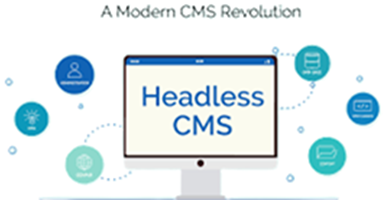
Unlike traditional CMS platforms, where the frontend (what users see) and backend (where content is managed) are tightly coupled, a headless CMS decouples these two components. The “head” refers to the presentation layer, which is absent or “headless” in this architecture. Instead, content is stored in a backend repository and delivered to any frontend or device via APIs.

This decoupled approach enables developers and marketers to create, manage, and distribute content seamlessly across multiple channels, including websites, mobile apps, smart devices, and even virtual reality platforms.

The Key Advantages of a Headless CMS

  1. Omnichannel Content Delivery In today’s world, users interact with brands across various touchpoints. A headless CMS allows content to be delivered consistently across websites, apps, social media, IoT devices, and more—ensuring a unified user experience.
  2. Flexibility and Customization Developers have the freedom to choose any frontend framework or programming language, providing endless customization possibilities. This flexibility makes it easier to build tailored solutions that meet specific business needs.
  3. Scalability A headless CMS is designed to handle the growing demands of modern applications. Since the frontend and backend are separate, the backend can scale independently, ensuring high performance even as traffic and content requirements grow.
  4. Future-Proof Architecture Technology evolves quickly, and a headless CMS ensures your content isn’t tied to outdated frontend frameworks. With APIs delivering content, you can adopt new technologies without reworking your entire CMS.
  5. Improved Developer Experience The decoupled nature of headless CMS allows developers to work independently on the frontend and backend. This separation streamlines workflows, reduces dependencies, and accelerates development timelines.

Popular Use Cases for Headless CMS

  1. E-commerce Deliver personalized shopping experiences across multiple platforms while maintaining consistent branding and messaging.
  2. Media and Entertainment Streamline content distribution to apps, smart TVs, and other devices, ensuring timely delivery of news, videos, and updates.
  3. Corporate Websites Manage content centrally while distributing it to microsites, blogs, and other digital properties efficiently.
  4. IoT and Wearable Devices Push content to smart devices, wearables, and other IoT-enabled platforms seamlessly.

Choosing the Right Headless CMS

When selecting a headless CMS, consider the following factors:

  • API Capabilities: Robust APIs ensure smooth integration with various platforms.
  • Ease of Use: A user-friendly interface for non-technical users like content creators and marketers.
  • Support and Community: Strong developer support and a thriving user community can be invaluable.
  • Scalability and Performance: Ensure the CMS can handle your current and future needs.
  • Cost: Evaluate pricing models to find a solution that fits your budget.

The Future of Content Management

As businesses strive to deliver more personalized and engaging experiences, the shift towards headless CMS is inevitable. By decoupling content from presentation, organizations can future-proof their digital strategies, streamline operations, and provide users with unparalleled experiences.

The power of headless CMS lies in its ability to empower developers and content creators alike. Whether you’re building a website, launching an app, or creating content for emerging platforms, a headless CMS offers the flexibility and scalability needed to thrive in the digital age.
The Rise of Serverless Architecture in Web Development

The Rise of Serverless Architecture in Web Development

WordPress

In recent years, the world of web development has undergone a significant transformation, with serverless architecture emerging as one of the most impactful trends. This paradigm shift is changing how developers build, deploy, and manage web applications, offering increased scalability, reduced operational overhead, and faster time-to-market. But what exactly is serverless architecture, and why is it gaining so much traction?

Understanding Serverless Architecture

Serverless architecture, despite its name, doesn’t mean that servers are no longer involved. Instead, it refers to a model where developers rely on cloud providers to manage the server infrastructure, freeing them from provisioning, scaling, and maintaining servers. Popular cloud services like AWS Lambda, Google Cloud Functions, and Azure Functions enable developers to write and deploy code without worrying about the underlying hardware.

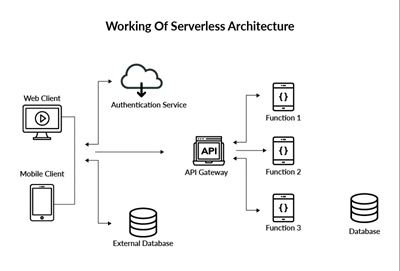
In a serverless setup, applications are broken into smaller, independent functions that execute in response to specific events. These functions are stateless and ephemeral, meaning they exist only for the duration of their execution. This approach allows for highly modular and scalable application designs.

The Benefits of Serverless Architecture

  1. Cost Efficiency: In traditional setups, businesses often pay for servers that are underutilized. With serverless, you only pay for the compute time you use, eliminating waste and optimizing costs.
  2. Scalability: Serverless architectures automatically scale to handle fluctuating workloads. Whether your app serves 10 users or 10,000, the underlying infrastructure adjusts seamlessly.
  3. Reduced Maintenance: By offloading server management to cloud providers, developers can focus on writing code and improving user experiences rather than dealing with operational headaches.
  4. Faster Development Cycles: Serverless platforms integrate with various tools and services, speeding up development and deployment. This agility enables teams to quickly iterate and bring features to market.

Use Cases Driving Serverless Adoption

  1. Real-Time Data Processing: Serverless is ideal for real-time applications such as chat apps, gaming leaderboards, and live analytics dashboards.
  2. API Backends: Many businesses use serverless to power APIs, enabling fast and scalable interactions between front-end applications and back-end services.
  3. IoT Applications: With the surge in IoT devices, serverless offers a cost-effective way to handle the massive volume of event-driven interactions these devices generate.
  4. Scheduled Tasks: Serverless functions can automate periodic tasks like database backups, report generation, and email notifications.

Challenges to Consider

Despite its advantages, serverless architecture is not without challenges:

  • Cold Starts: Serverless functions can experience latency during their initial execution due to the time taken to initialize resources.
  • Vendor Lock-In: Relying heavily on a single cloud provider’s ecosystem can make migration challenging.
  • Debugging Complexity: The distributed nature of serverless systems can complicate debugging and monitoring.

The Future of Serverless in Web Development

As serverless architecture continues to mature, its adoption is expected to rise. Innovations in reducing cold start times, improving developer tools, and enhancing multi-cloud compatibility are addressing existing limitations. With organizations increasingly seeking agile, scalable, and cost-effective solutions, serverless is becoming a cornerstone of modern web development.

In conclusion, serverless architecture represents a shift in how developers approach web application design and deployment. By abstracting infrastructure management, it empowers teams to innovate and deliver value faster. As the technology evolves, it’s poised to play an even more significant role in shaping the future of web development.

Beaver Page Builder vs Elementor page builder

Beaver Page Builder vs Elementor page builder

WordPress

Both Beaver Builder and Elementor are popular page builders for WordPress. They allow users to create custom page layouts using drag-and-drop interfaces, without requiring any coding knowledge.

Here are some of the differences between Beaver Builder and Elementor:

  1. User Interface: Both page builders have a similar interface, but Elementor has a larger library of per-designed templates and widgets, which can be helpful for users who want to quickly build a page.
  2. Speed: Beaver Builder is known for its fast loading times and is optimized for speed, which is important for improving the user experience.
  3. Customization: Elementor offers more customization options than Beaver Builder, including more advanced typography controls, gradient backgrounds, and CSS filters.
  4. Pricing: Both page builders offer free and paid versions. However, Beaver Builder’s paid version is less expensive than Elementor’s, making it a more affordable option.

Overall, both page builders have their strengths and weaknesses, and the choice between them depends on the user’s needs and preferences.

WordPress Templates